What are 5 Modern Methods to Value Intangible Assets
Learn What are 5 Modern Methods to Value Intangible Assets
Intangibles have become the core of creating business value in the current knowledge-based economy. Brands, patents, copyrights, software, customer relationships and proprietary technologies bring added value to stocks and assets of a company- although they might not necessarily reflect directly on a balance sheet. Good quality of measurement of these intangible assets is more important than ever as businesses operate, increasingly, in an innovation-driven environment. or businesses seeking professional intangibles valuation Singapore, this paper takes a closer look at 5 contemporary methods of valuing intangible property and explains when each of them is applied, and how.
The Importance of Intangible Asset Valuation
In conventional finance, the valuation of assets was usually done with the help of tangibles such as real estate, equipment and inventory. However, in this case, most of the value of modern companies is frequently based on intangibles, particularly, of the ones operating within the pharmaceuticals, information technology, and media sectors.
Adequate valuation of the intangible assets does not only help in internal management or investor reporting. It is also essential in mergers and acquisitions (M&A), financial reporting (particularly when measured against IFRS and US GAAP reporting standards), Intellectual property valuation services Singapore deals, taxation and litigation. Valuers have to take into account several contingencies such as the legal protection of the asset, the useful life that is left, its income generating capability and the risks that are connected with ownership.
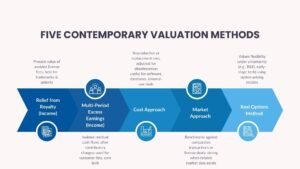
1. Income Approach: Relief from Royalty Method
Relief from Royalty Method is the relief that is one of the most acceptable and common, especially on intellectual property such as trademarks and patents. The methodology of using this technique relies on estimating royalties that a company will have to pay in case the asset is owned by another company, and it has to pay to license the use of the asset.
To employ this technique, analysts calculate the amount of revenue that the intangible resource will bring in the future. A royalty rate is then generated and used to estimate hypothetical licensing costs; normally based upon similar market-based data. The discounted amount of these projected royalties is computed to the present value based on the reasonable rate of discount that should reflect the risk factor of the concerned asset and business.
It is a popular way of values trademarks and additionally, this approach carries the merit of being closely related to the economics of a licensing business. But it is based more on assumptions of royalty rates and revenue projections and may be subject to some uncertainty unless it is founded on good data.
2. Income Approach: Multi-Period Excess Earnings Method (MEEM)
Multi-Period Excess Earnings Method (MEEM) is usually employed to seek value on the uncovered intangible assets that are the most important pillars of the company earnings, including customer relations or core technology.
The approach de-couples the cash flows linked to the intangible asset being measured by subtracting off charges for contributory resources, other tangible and intangible resources to earn income. Once these charges have been deducted, then the point of the so-called excess earnings are said to belong to the asset in question.
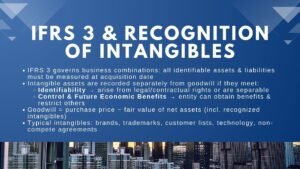
MEEM is also widely used in the purchase price allocation of transactions when using IFRS 3 or ASC 805 where companies themselves purchase businesses that have complicated portfolios of assets. MEEM might not be highly resource-demanding, but conceptually speaking it needs carefully formulated predictions and the capacity to digest individual sectors’ impact in order to perform well.
3. Cost Approach: Reproduction and Replacement Cost Methods
The value of an intangible asset as per the cost approach is considered to be what amount of money will be used to re-produce the asset, or else replace the asset with a similar form. This is particularly appropriate when the asset is not generating its own revenue as it may be the case with a program like software, databases or internal-use technologies.
The reproduction cost is the cost of making another copy of the same asset, whereas replacement cost is a sum which would be needed in order to create a functionally similar asset using current material, design and standards. The adjustments that are always conducted include obsolescence (technological and physical), and the factors of economics.
This method is best applicable where the intangibles are internally generated or when there exists a paucity of information on market data intending to display the value of comparative assets. Nevertheless, it underprices those assets with special benefits in the market or produces unequal profits compared to the cost of producing these assets.
4. Market Approach: Comparable Transactions Method
The market-based technique is dependent on the perceived prices being paid on comparable intangible assets in transactions over the past. These can be actual sales, licensing or M&A transactions, in which discrete elements of the intangibles were self-valued.
The available market data is evaluated so that valuation professionals can identify the transactions in which a comparable asset takes place and in which industry, geography, asset life, and risk profile are considered. After finding apt comparables, their rates/metrics (i.e. multiples of revenue or earnings are put on the subject asset).
The major strength of the approach lies in the fact that it is based on the reality of market behavior. The distribution of a particular transaction is usually difficult because of the possible lack of any apples-to-apples comparisons, more so in the case of proprietary or highly specific assets. In addition, the terms of transactions are not always revealed and it can be hard to derive granular information required to do any reliable benchmarking.
5. Real Options Method
The Real Options Method implements the financial option theory to the intangible assets. It appreciates the worth of flexibility in management and future decision-making under uncertainty which is a critical factor in the case of early-stage technologies, drug development projects, or R&D programs.
With this approach, the management has the option of taking on some projects, like the introduction of a product or entry into a market but is not obliged to. They are then priced by methods based upon financial approaches such as the black-scholes model or others that form trees.
In spite of its technical intricacy, the Real Options Method is very valuable in situations, where future cash flows are not definite, and courses of action rely on explicit circumstances. It accounts well as compared to other valuation strategies, the contingent nature of the innovation and IP investments. Nevertheless, its richness and use of subjective input parameters preclude its common usage in special applications.
Choosing the Right Method
Intangible asset valuation does not have a common fix. The most suitable approach is based on the nature of an asset, the valuation purpose, the availability of data, and the financial reporting or legal framework is applicable.
The income-based approaches are more preferred when it is possible to make predictable projections and where the asset itself aids in cash flow. The cost-based techniques are suited to assets whose outcomes are not directly revenue generating and others whose developmental path is apparent. The market-based approaches provide real-life comparability yet it has limitations because of scarcity of data. In the meantime, the Real Options Method is most applicable with respect to highly uncertain and innovation-oriented settings.
Frequently a combination of techniques are used to triangulate a zone of values especially when the stakes are large e.g. in M&A or transfer pricing disputes.
Challenges in Intangible Asset Valuation
As intangible assets are increasingly becoming more crucial, there are a number of problems associated with their valuation. This intangible quality of these assets first of all implies that they are not readily transferable, they cannot be benchmarked, and do not have observable prices in the market. Also, future economic benefits are estimate requiring assumptions of competitive advantage, market dynamic, and the enforceability of law, which is uncertain in nature.
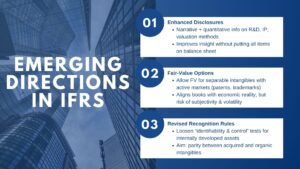
Regulatory and accounting treatment is another great challenge. Under any measurement standard such as IFRS and US GAAP, it is not common to recognize acquired intangibles in its balance sheet which implies that internally generated assets could be materially understated in the accounts. This is restrictive and may hide the veritable monetary merit of innovation.
Control, ownership and legal rights are also questioned in terms of valuation. As an example, the worth of a customer list might depend on the privacy laws whereas a patented technology might be of little value when it is inexpensive to avoid.
Conclusion: What are 5 Modern Methods to Value Intangible Assets
With the ever-changing global economies moving along the knowledge intensive and innovation driven models, the willingness to value intangible assets with precision has become a strategic determinant. In terms of compliance, pure dealmaking or strategy, each of the five modern approaches presented here that of Relief from Royalty,Multi-Period Excess Earnings,Cost-Based, Market-Based and Real Options it can be discussed as a powerful tool that businesses and professionals of valuation will find useful to use.
Both approaches are strong and weak in their own ways. There ought to be a grey sense of the asset under consideration, the purpose of valuation, and the wider nature of the situation within a commercial environment to which the asset belongs. By using the appropriate methods and transparently, the firms can be more representative of the actual drivers of the enterprise value within the 21st century economy.