How to Value Data as an Intangible Asset
How to Value Data as an Intangible Asset
But many businesses have one of the most valuable assets they possess – data – and it doesn’t show up on a balance sheet for the majority of businesses at anything near to its actual value. The value of data as an intangible asset is important because data internally created, rather than acquired from a database or a purchased customer list, cannot be capitalized by most accounting systems, thus providing an honest answer to the question of the difference between economic value and reported data. This void has a real implication: businesses regularly fail to invest adequately in safeguarding and harnessing their data assets because they are not visible in the numbers that guide the management and board’s investment priorities. The article provides a primer on data asset valuation from first principles, including an explanation of how to value data using commonly-used techniques, the specific techniques that practitioners use to value data, and how to argue the strategic value of data to boards, investors, and acquirers who may not yet see data as a valuable, measurable asset. In theory, the logic used is very similar to the much more mature intangible asset valuation discipline, but in a realm of assets which finance functions have only just begun to consider with the seriousness that is akin to trademarks, patents and customers.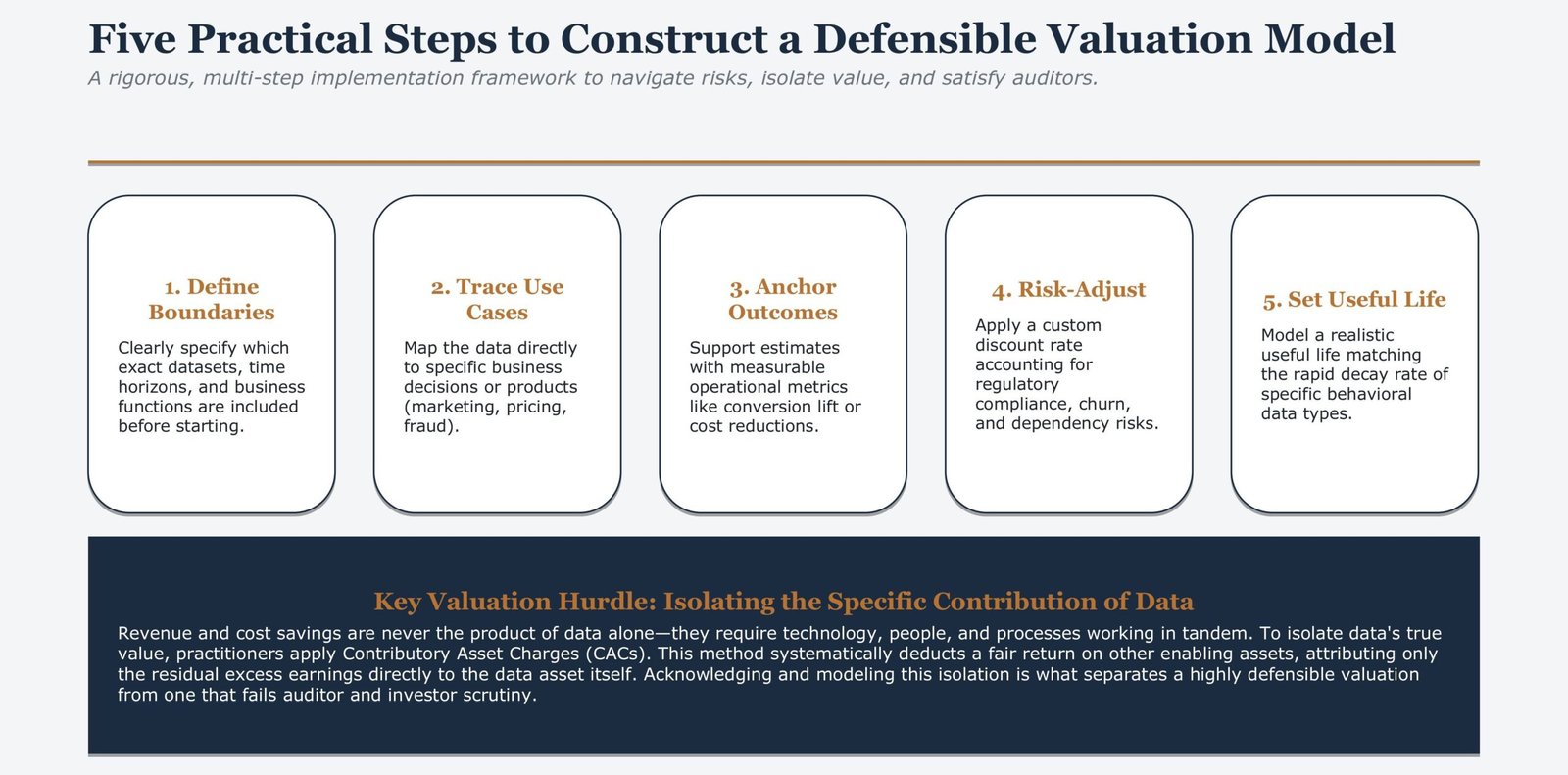
What Does It Mean to Treat Data as an Intangible Asset and How to Value Data as an Intangible Asset?
In the same conceptual way that a trademark or a customer relationship is an intangible asset, data is an intangible asset: it’s not physically present, it can create value for the company in the future, and the company can control access to the data without having to touch it or store it in a warehouse. What sets data apart from other intangibles is its value is heavily dependent on context; the same set of raw transaction records may be virtually useless to one company and very valuable to another, depending on what each company can do with them. Recognizing the value of data as an intangible asset begins by acknowledging that data, by itself, is not the source of value; raw, unstructured data is of little use. Value comes from the data, the ability to analyze it, uncover insight from it and leverage that insight into a profitable business model. It’s a nuanced but important tag on valuing data as an intangible asset: Even if two companies have the same data sets, they might come up with very different valuations just because one has developed the organizational ability to make use of the data and another has not. In actual practice, this is a very important distinction for the valuation of data intangible assets as a valuer must be able to avoid the temptation to value a data set simply based on volume (e.g. number of records held) and instead be focused on the specific decisions that the data can support, or the specific products that the data can produce. If there are only millions of rows in the retailer’s purchase history database somewhere, that is not enough value; it’s more valuable because it helps the retailer better forecast sales and better target marketing. Mistaking number of records or storage volume for value, which can be a problem for junior professionals new to this area, is one of the more important early steps in acquiring a true sense of competence in this area is to question that instinct and ask what economic activity is the data in question serving? Moreover, by talking about data in terms of decisions it can help to make, instead of its size or technical complexity, you’re also employing the same discipline that enables you to convince the board or investment committee that may be overlooking data as a strength to be more intangible than quantifiable.What Data Asset Valuation Methods Do Practitioners Use?
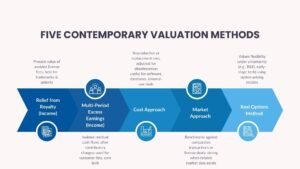
Currently, there are different data asset valuation approaches similar to the well-known valuation techniques for other intangible assets, but with modifications, reflecting the specific nature of data. The income approach generally involves a discounted cash flow model approach and/or a variant of the multi-period excess earnings method, which calculates the incremental cash flows a business generates due to its access to the data, for example, higher conversion rates as a result of more personalized recommendations or lower fraud losses due to better risk scoring etc. The market approach considers transactions that are similar to the data asset being appraised, such as data licensing agreements or acquisitions in which a data asset has been a distinct identifiable element of the purchase price. Relatively few comparable transactions exist because most data transactions are not publicly reported to the extent required to identify clean data transfer pricing indicators. When there are similar transactions available, analysts usually adjust for some measure of data volume and/or coverage amongst the users to arrive at the measure before applying the resulting benchmark, but it is also important to perform the normalization with care, as the strategic value of two sets of data of similar size can be quite different depending on the quality, exclusiveness, and timeliness of the data. A cost approach is useful as a floor value or as a sanity check, but is not often used as a primary approach; the cost of collecting data does not necessarily equal the economic value of the data to a company once they have learned how to extract insight from it. In practice, most of the credible approaches to data asset valuation mix these approaches, with an income-based estimate providing the primary conclusion and the cost and market evidence (where available) used to see if that conclusion seems reasonable. Knowing which method is the best to use in a particular situation, and why the others were used but were not the methods primarily relied upon, is a skill which makes a defensible valuation from a number that will not hold up with an auditor or a skeptical investor. Experts in this field are likely to have a library of past engagements cataloged by data type and industry, because patterns of which available methods of data asset valuation were most persuasive in a particular type of data are likely to repeat across otherwise unrelated engagements.Table 1: Data Asset Valuation Methods Compared – How to Value Data as an Intangible Asset
| Method | Best Fit | Key Inputs |
|---|---|---|
| Income approach | Data actively driving measurable revenue or cost savings | Incremental cash flow, discount rate, useful life |
| Market approach | Data with observable comparable transactions | Comparable licensing or transaction pricing |
| Cost approach | Early-stage data assets not yet monetized | Collection, cleansing, and infrastructure cost |
How to Value Data When Building a Valuation Model Step by Step?
Defining the scope of the data asset is a crucial first step to valuing it in a working model: What data sets are included, what time period, and what business use cases actually rely on the data sets that are included. From there, the analyst can think through the use cases the data can assist with, whether it’s targeted marketing, price optimization, fraud prevention, or product innovation, and calculate the incremental financial impact they believe they can deliver on each use case, ideally with internal data that already shows a positive effect, like an improvement in conversion rates, a reduction in costs, or a decrease in churn. This often involves close cooperation with data science and product teams, who usually have the operational metrics required to make it easier to assign a financial value to the use of a data asset, and finance professionals who have a strong working relationship with these teams tend to estimate their data assets better than those who only rely on finance data. This cross-functional dependency is one of the most obvious practical distinctions between valuing data and valuing a more traditional intangible asset, like a trademark, whose inputs are usually more firmly rooted in finance and legal functions that valuation professionals already work in on a regular basis. This is also the place where the strategic use of data becomes most apparent in practice as the cross-functional discussion needed to develop the valuation can highlight use cases and opportunities that the finance team and the operating teams haven’t clearly communicated to one another. After estimating the financial contribution of the use cases, the analyst applies an appropriate discount rate for the specific risk profile of the data asset, e.g. data privacy regulatory risk, loss of value of the data due to the emergence of similar data assets from competitors, risk that a critical data source may be lost, e.g. partner may end up data-sharing agreement. Another useful life assumption is necessary because most data assets don’t have a long shelf life; behavioural data can become less useful over shorter durations, as customers’ preferences change; some sets of reference data can be useful for much longer. Putting these elements together into an individual defensible number is the practical meat of data intangible asset valuation: and it is important to note that this result is not usually a single number, but rather a range of numbers, representing real uncertainties in some of the assumptions. It’s usually much more convincing to a skeptical audience if that range is presented clearly, along with the specific use cases and metrics that it is based on, than if an artificially precise single number is presented that suggests more confidence than can actually be warranted by the underlying analysis.What Five Steps Help You Value Data as an Intangible Asset?
- Set up clear asset boundaries. Before modeling is even started, indicate what data sets, time periods, and business uses will be incorporated in the valuation; a poorly scoped boundary is a poor basis for subsequent calculations.
- Identify scope of data to specific use cases. Focus on the specific business activities the information is being used for (e.g., pricing, marketing, risk decision) instead of abstractly valuing the data set.
- Ground estimates with measurable results. Support the incremental financial benefit of the data with internal metrics including conversion, retention, cost reduction, etc., not just on assumption.
- Apply a risk adjusted discount rate. Address regulatory, competitive and dependency risks to the data asset instead of using a generic company-wide discount rate.
- Establish a realistic useful life. Align the assumed useful life with the rate of obsolescence, inaccuracy and competitive advantage of the type of data.
What Real-World Examples Show the Strategic Value of Data?
Let’s take the example of Ashgrove Retail Analytics, an average-sized e-commerce company that has collected a comprehensive customer purchase history data set over a multi-year period. The company sought to sell, and the due diligence team of the buying company carried out a separate data intangible asset valuation, as the customer information was known early in the deal as a strategic driver. The team measured the incremental margin that the company’s personalisation recommendation system could create with the company’s business and assigned a substantial proportion of enterprise value to that business as a result of that purchase data, rather than the goodwill number. Having a distinction was important to the acquirer because it made it clear and explicit what they were paying for and it assisted them in structuring the priorities for the post acquisition integration in terms of protecting and expanding the value that they are paying for. Later, the team of the acquirer said it was much simpler to look at the data valuation component and see, over the years after the deal, if that asset was actually earning the returns that the deal thesis had predicted. An example of this is Portwell Logistics, a freight and supply chain company that had years of shipment routing and delay history throughout their network. Portwell’s finance team – when they were reviewing the potential for underused assets – found that the routing data could be packaged in a way that makes it usable, and that could be licensed to smaller logistics providers who might not be able to collect the data themselves because they simply don’t have the scale. The process of valuing the data as an intangible asset, after just eighteen months of the initial exercise, has brought a whole new line in the company’s revenue statement that had not previously materialized – a high-margin new revenue stream, not just a number on a balance sheet footnote. But the Portwell case has become a textbook example at the company of the strategic importance of data, just because the payment is for licensing – not just something that happened to be on the right side of the coin. The lesson to be taken from both examples is that a formal valuation of a data asset, whether as a result of transaction or as an exercise in its own right, tends to lead to a change in behaviour subsequent to the valuation – for Portwell, it becomes an actively managed and monetised asset as well.What Challenges and Lessons Come With Data Intangible Asset Valuation?
The ongoing difficulty with valuing data as an intangible asset is the ability to separate its unique impact from the many other elements contributing to a company’s performance; most revenue and cost outcomes are the result of the interplay of data, technology, people, and process as opposed to data alone. One way analysts do this is by applying contributory asset charges—a method that is used in other intangible asset valuations—that subtracts a fair return from the other assets included, and then charges the rest to the data. The second challenge is regulatory uncertainty: data privacy regulation is dynamic and changing across jurisdictions, and a valuation based on a future use of the data set, which you assume is unrestricted, could end up needing to be massaged if, for example, new consent or data localization requirements change how your data can be used in the future. A third challenge to mention is internal politics: sometimes, teams may react negatively to a formal data intangible asset valuation because they don’t want their data assessed so thoroughly, and valuers should expect it to be a bit of a rocky road. In the context of data valuations, the most important reminder is that data collection methods, regulation, and the competition in the data landscape can change rapidly, making it more critical than in the context of other longer-lived intangible assets such as a trademark to revisit the valuation analysis at least annually. Practitioners also learn that presenting a data intangible asset valuation transparently with clearly stated use cases and assumptions is far more credible with skeptical stakeholders – because data valuation is a relatively new field and stakeholders are reasonable in wanting to understand the reasonings behind the valuation, rather than simply accept a number on faith. Last but not least with data valuation as a continuous management process, not a one-off transaction, it is more likely to create organisations that invest in and defend their data assets, rather than allow them to slowly decline as a result of neglect. As the need for credible data intangible asset valuation grows in almost every industry in the economy, the professionals who strictly adhere to this task, and do not treat it as a rough afterthought, are becoming sought after.Table 2: Common Challenges in Data Intangible Asset Valuation and Practical Mitigations – How to Value Data as an Intangible Asset
| Challenge | Practical Mitigation |
|---|---|
| Isolating data’s contribution from other assets | Apply contributory asset charges to other enabling assets |
| Regulatory uncertainty around future data use | Build regulatory risk explicitly into the discount rate or scenarios |
| Rapid decay in data relevance | Set a useful life reflecting the specific data type’s decay rate |
| Limited market comparables | Use market evidence as a sanity check rather than a primary method |
| Stakeholder skepticism about the final figure | Present use cases and assumptions transparently alongside the number |