Intangible Asset Valuation Malaysia
A Practical Guide for Finance & Valuation Professionals – Intangoble Asset Valuation Malaysia
Introduction to Intangible Asset Valuation Malaysia
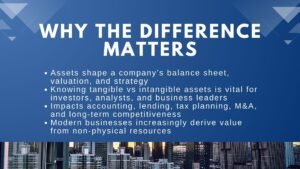
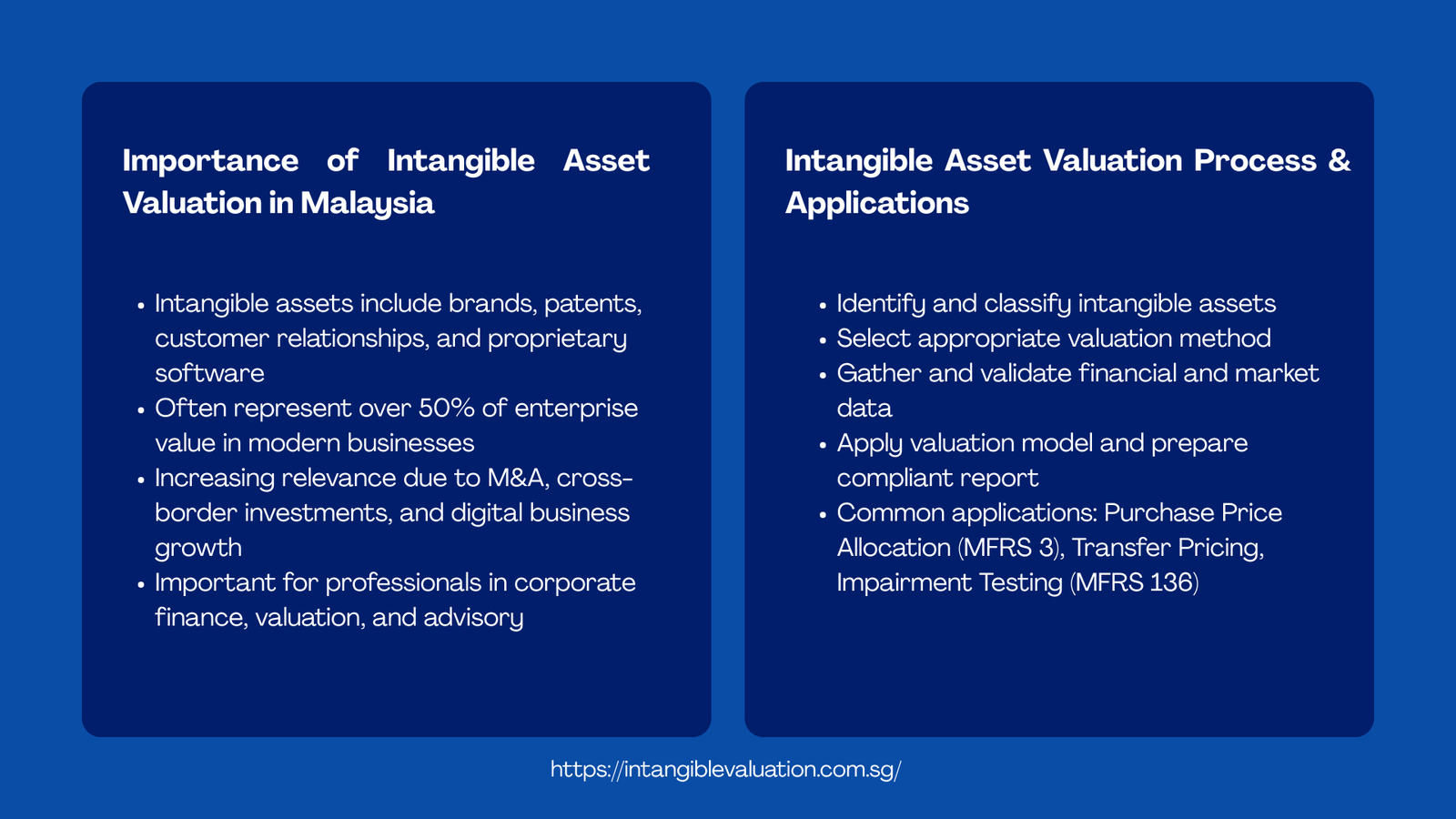
The business environment in Malaysia is changing at a high pace. With the increasing cases of mergers, acquisitions and cross-border investments, the option to accurately identify and value intangible assets has never been more important. In comparison to the physical property, like land or machinery, intangibles, including brand names or patents, customer relationships, or proprietary software, are not always visible on the balance sheet but are typically the greatest sources of enterprise value. To a good number of Malaysian corporations, particularly in such areas as technology, healthcare, and consumer goods, intangible assets sometimes comprise over half of the estimated value of the firm.
Although they are important, intangible asset valuation is a relatively unexplored field among junior to mid-level level of finance practitioners in Malaysia. The valuation of intangibles is often discussed on a broader level by many practitioners whose exposure to the technical frameworks, regulatory requirements and methodological nuances is not as comprehensive. This paper seeks to fill such a gap – providing a grounded practical overview of how intangible asset valuation operates within the Malaysian setting, how this is achieved, what are the issues and what can professionals do to build competence in this emerging field.
This guide will provide you with a good ground to work in corporate finance, valuation firm, audit practice, or even give a thought to a career move in advisory. The information is covered across valuation techniques, regulatory interactions and practical examples based on the Malaysian market, and the steps that you can take to enhance your knowledge.
Understanding Intangible Asset Valuation Malaysia
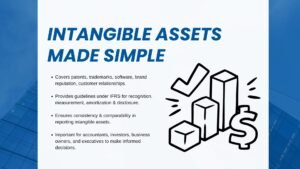
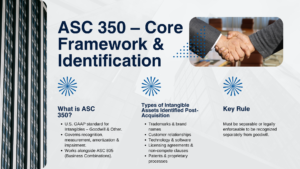
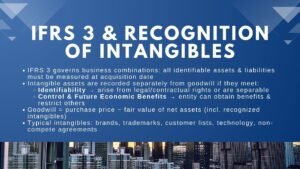
The broad definition of intangible assets is based on non-monetary assets that lack physical form and which are operated by a given entity and would create future economic advantages. According to Malaysian Financial Reporting Standards – specifically MFRS 138 (Intangible Assets) — an asset is one that is identifiable, by separability or by right to contract, and the cost of the asset is reliably determined. The framework is very similar to the IAS 38, implying that Malaysian practitioners can implement the same principles when making cross-border transactions in the IFRS-reporting jurisdictions.
As a matter of fact, intangible assets are classified into various broad categories, which are characterized by different valuation attributes. Intangibles based on marketing like trademarks and trade names are valuated based on the recognition and loyalty they muster in the market. Intangibles related to customer such as customer list, customer long term contracts and so on value in existing customer relationship are captured by customer related intangibles. Patents, proprietary software and trade secrets are technology-based assets which represent innovation and competitive advantage. Contract based assets include licensing agreements and franchise agreements whereas intangibles that relate to art include copyrights on artistic works.
TABLE 1 : Common intangible assets categories – Intangible Asset Valuation Malaysia
| Asset Category | Examples | Common Valuation Method |
|---|---|---|
| Marketing-Related | Trademarks, trade names, logos | Relief from Royalty |
| Customer-Related | Customer lists, contracts, relationships | Multi-Period Excess Earnings |
| Technology-Based | Patents, proprietary software, trade secrets | Relief from Royalty / Cost Approach |
| Contract-Based | Licences, franchise agreements, leases | Income Approach |
| Artistic-Related | Copyrights, creative works | Relief from Royalty |
As part of the Malaysian context, intangible assets are common occurrences when it comes to purchase price allocation (PPA) exercises after business combinations, transfer pricing arrangement amid related parties, and impairment testing in accordance with MFRS 136. An increasing proportion of Malaysian firms, not only publicly-traded conglomerates and family-owned businesses moving in the region but also technology startups drawing venture capital are being advised by their auditors or tax authorities or counterparties to a transaction to get formal valuations of their unspontaneous assets.
Valuation Methods of Intangible Assets of Business – Intangible Asset Valuation Malaysia
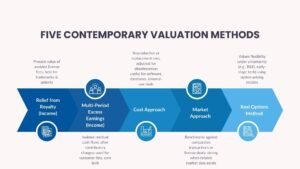
An appropriate methodology is a core requirement to any sound valuation exercise. The three main approaches, which are the income approach, the market approach, and the cost approach, have different assumptions and can be applied in various data environments and assets. In the Malaysian tradition, the income approach predominates, especially when it comes to assets which produce identifiable and predictable cash flows. The first actual competency that a professional of the genre should cultivate is the knowledge of intangible valuation of assets in a business.
Under the income approach, the Relief from Royalty (RfR) is one of the most popular techniques that are used especially in the case of trademarks and patents. The reasoning is simple; when a company did not own the property, it would pay royalty to use it; the worth of the property would be the current worth of the royalty savings. Another income-based approach that is widely applied in customer relationships and core technology assets is called the Multi-Period Excess Earnings Method (MPEEM). It separates the cash flows that can be related to a particular intangible by eliminating charges on all the other contributing assets – a technically challenging but strong method. The With-and-Without Method, which is less often applicable, but highly applicable with non-compete agreements, is an estimation of value based on the difference between business cash flows with and without the asset at the location.
The market approach is based on the transaction information of similar arm length relationships. It is intuitively obvious in theory, yet in practice, comparable data that is reliable on intangibles in Malaysia may be unavailable, especially on niche or proprietary assets. Valuators typically tend to subtract the international databases on top of local data and compensate the country risk and industry specific factors. The cost approach, in its turn, is an estimate of value on how much it would cost to reproduce or obtain a replacement of the asset (useful on internally developed software or assembled workforces), but it is not easy to reflect economic obsolescence. The following table will be a summary of the important methods and their common uses.
TABLE 2 : Valuation techniques in a nutshell – Intangible Asset Valuation Malaysia
| Method | Best Used For | Data Required | Complexity |
|---|---|---|---|
| Relief from Royalty | Trademarks, patents | Royalty rates, revenue forecasts | Moderate |
| Multi Period Excess Earnings (MPEEM). | Core customer relationships | Revenue, cost allocations, attrition rates | High |
| Cost Approach | In-process assets, software | Development costs, obsolescence factors | Low–Moderate |
| With-and-Without Method | Non-compete agreements, covenants | Revenue impact, avoided costs | Moderate |
| Greenfield Method | Licences, distribution rights | Build-up cost, ramp-up period | High |
5 Major Procedures in a Profession Intangible Asset Valuation Engagement – Intangible Asset Valuation Malaysia
Regardless of whether you are bearing out a transaction, satisfying a reporting need, or helping a client with a tax structure, properly carried out a valuation engagement will have a common process. Engaging professional intangible asset valuation services In-house or an external firm implies maneuvering through five focal steps that suffice the dependability and justification of the end product.
Process Flow : The 4 step Valuation Framework – Intangible Asset Valuation Malaysia
| Step | Phase | What to Do |
|---|---|---|
| 1 | Identify & Classify Intangibles | Register all the intangible property by category (marketing, customer, technology, contract). Check legal files, financial, and operations. Identify the assets that are separable or contractual in nature. |
| 2 | Select Valuation Method | Assign the right method of valuation to the various assets. Take into account the availability of data, intention to valuation (MFRS 3, PPA, transfer pricing) and the norms within the industry. Where necessary consult a registered valuator. |
| 3 | Gather & Validate Data | Gather financial estimates, royalty standards, client loss numbers and budgets. Test assumptions on the market data and similar transactions. Record all references with a lot of care. |
| 4 | Apply, Review & Report | Stress-test and key assumptions of the valuation model. Comparison between outputs and reasonableness tests. Write a compliant valuation report which is in line with MFRS, the IFRS, or Valuation Standards requirements. |
There are two other points that need to be noted in any serious engagement other than the above four main steps of the process. The fifth factor is communication with stakeholders: valuation outputs should be transferred so that they could be interpreted and used by non-technical decision-makers. Technical report will have little practical value when it cannot be communicated effectively to a board, auditor or the tax authority. Lastly, reviewing post-engagement – restating the assumptions and comparing them to the actual reality – inculcates institutional knowledge that accelerates and corrects future engagements. Companies that invest in such feedback loop gain a significant advantage in the long-term perspective.
Application of Intangible Asset Valuation of Financial Reporting in Malaysia in real life – Intangible Asset Valuation Malaysia
A business combination is the most prevalent incident in which the formal valuation of intangible assets is done in Malaysia. In the case of Company A acquiring Company B, the acquirer must under the case of. MFRS 3 (Business Combinations) to assign the purchase price to identifiable assets, liabilities and intangibles – a process referred to as Purchase Price Allocation. Intangible asset valuation for financial reporting in this regard should be of high evidentiary standard because the outputs directly impact on the balance sheet of the acquirer and further amortisation expenses.
Take the case of a situation that is typical in the Malaysian consumer goods industry: a medium-sized food and beverage firm buys a smaller local brand that has a robust presence in the East Malaysian market. The brand that was acquired is not registered as the intellectual property and the name of the brand is well known; it has a high customer base. After the acquisition, the acquirer auditors need a PPA exercise. The valuation team uses the Relief from Royalty approach, which compares royalty rates with other similar food and beverage brand licencing deals in Southeast Asia. Once a reasonable rate of discount (representing the risk to the business of the acquired business) the brand is valued at RM 18 million – a value which would have to be amortised over the estimated useful life, which would impact on reported earnings in future years.
The other biggest area in which intangible asset valuation has been central is in transfer pricing. Inland Revenue Board (LHDN) of Malaysia adheres to the OECD Transfer Pricing Guidelines as per which intercompany transactions such as licensing of intellectual property to related parties must be carried out at arm length. The royalty rate that is charged by a Malaysian parent company licensing a proprietary manufacturing process to a subsidiary in Indonesia must be defended by a fair valuation. The lack of this would subject the group to tax cuts and sanctions. This is one of the areas where practitioners in the field of valuation and tax compliance are still in demand regionally.
Difficulties, Experiences, and Competence Development in Intangible Asset Valuation Malaysia
The valuation of intangible assets is a science, but an art. Even seasoned practitioners are faced with such persistent challenges as data constraints, subjective assumptions, and conflicting stakeholder expectations amongst them. When junior professionals are in this space, it is in their best interest to know the location of the difficulty to navigate it well.
TABLE 3 : Common challenges and strategies – Intangible Asset Valuation Malaysia
| Common Challenge | Practical Approach |
|---|---|
| Little information on the market regarding royalty rates. | International databases (RoyaltyStat, ktMINE) and risk adjustments of Malaysia. |
| Too optimistic forecasts of the management. | Cross-checks; sensitise assumptions to industry standards. |
| Challenges in separating cash flows of assets. | Apply MPEEM technique with unambiguous contributory asset charges. |
| Aligning regulation and taxation. | liaise with tax advisors to verify that there is consistency in transfer pricing as per LHDN requirements. |
| Absence of documentation within an organization. | Bring back asset histories by working backward out of financial documentation and legal contracts. |
Impairment reviews are one of the most educative learning experiences in the practice of Malaysian valuation. In the scenario of a listed company having a massive intangible property, e.g. a customer-facing technology platform, experiencing a decline in revenues, auditors might need to perform an impairment assessment when MFRS 136 is applied. The exercise causes the valuation group to reconsider the assumptions at the point of acquisition: Was the customer attrition rate realistic? Did it have synergies that were counted twice? Have the competitive environment changed the useful life of the asset? These reviews are distasteful yet highly informative. They put professionals into practice on the practical implications of valuation assumptions in such a way that academic training fails to capture.
Career wise, career development professionals seeking to establish credibility in this area ought to seek both the technical training and the exposure to the practice. Other qualifications like the Chartered Financial Analyst (CFA), membership on Royal Institution of Surveyors Malaysia (RISM), or training in line with the international valuation standards (IVS) is gaining recognition both to clients and regulators. In more practical terms, pursuance of positions or secondments in transaction advisory, audit, or corporate development groups – in which PPA exercises or transfer pricing studies are commonly performed – facilitates learning much faster than any course.
Conclusion – Intangible Asset Valuation Malaysia
Intangible assets are no longer side notes on a balance sheet, but it is the focus of the creation, transfer and reporting of value in the contemporary Malaysian economy. The need to find professionals capable of working through intangible asset valuation approaches to businesses with rigour and clarity is only going to intensify as the regulation tightens, digital-first businesses scale, and cross-border transactions become more complicated.
In the case of junior and mid-level professionals, it is obvious. Begin by gaining a good understanding of the fundamental methodologies Relief from Royalty, MPEEM, and the cost approach and what each may be used. Become familiar with applicable reporting standards especially MFRS 3, MFRS 136 and MFRS 138. Find activities in which PPA work, transfer pricing studies, or impairment reviews are done, and approach each of them as a case study in applied reasoning. As much as you can do, reach out to firms engaged in professional intangible asset valuation in order to see how seasoned practitioners organize their work and deal with stakeholder expectations.
The most practical lesson that anyone can get his/her way in the beginning is that documentation is extremely important. Every assumption that you make, be it a royalty rate, a discount rate, a useful life of an asset, should be able to be traced to a source, subject to analysis, and well expounded in simple terms. Your clients, auditors as well as tax authorities are not merely assessing your figures; they are assessing your rationale. Develop that culture in your youth, and it will make you stand out in any endeavor you involve yourself in. Intangible asset valuation for financial reporting is finally a field in which intellectual honesty, intellectual discipline, and confidence in making judgements in uncertain circumstances will be rewarded, all of which will contribute to any finance practitioner over a lifetime.